
Leading With an Iron Fist or a Compassionate Heart
Which Style of Leadership is Better?
This essay offers a practical tip in the executive leadership area within good governance. It is part of the monthly series on strengthening governance in private companies, non-profit organizations, and public institutions.
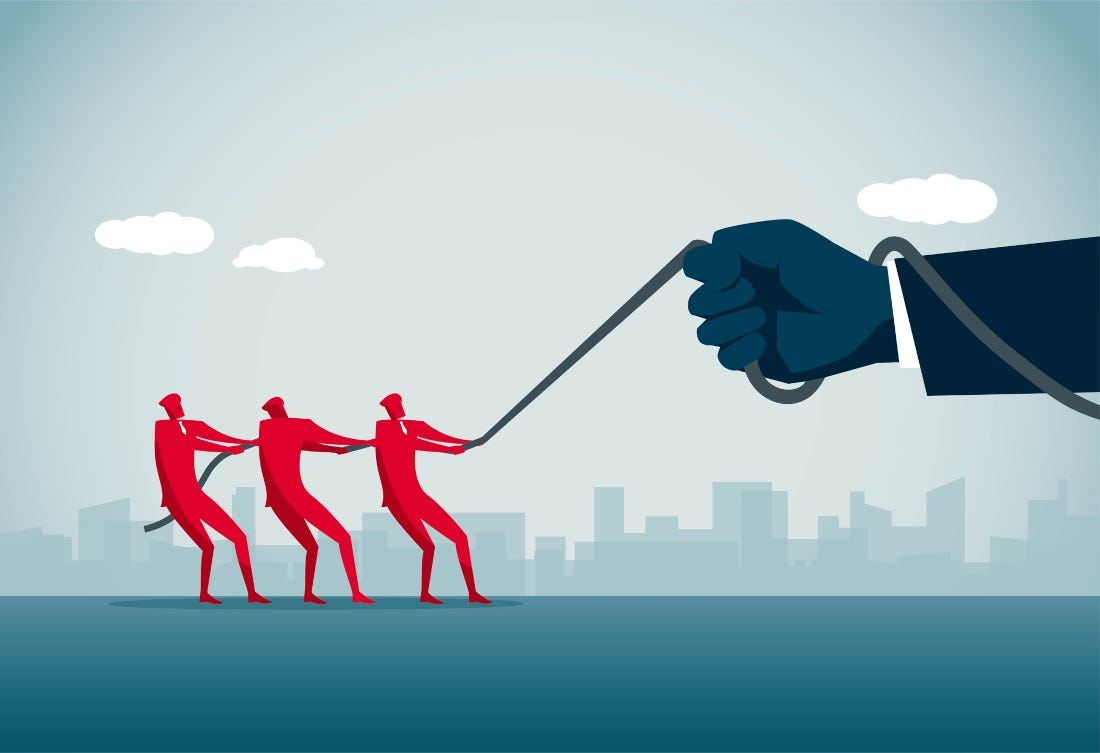
“All authority implies the exercise of power, power in the sense of the capacity to bring about change, to bring about transformation. A leader needs to have power, and that power needs to be the right kind of power for the function involved. We call authoritarianism the use of excessive power beyond that needed to carry out the function in question. Authoritarianism is a distortion of functional power, because it tends to distort the structural characteristics of the organization itself. Authoritarianism often stems from a problem in the personality of the leader.”[1]
Dr. Otto Kernberg, a psychiatrist and expert on personality disorders, commented on the purpose of executive leadership from the perspective of psychoanalysis. His insight on how a person should lead has bearing and tremendous gravity at this particular moment in time. It’s 2026. A leader needs a certain degree of power to accomplish objectives. However, the power he wields can be taken to extreme ends. And if that leader has an unresolved internal conflict within himself, he may use power, which was legitimately authorized initially, to exact his will against others and perhaps society, which then becomes an illegitimate use of authority. Indeed, the U.S. Supreme Court reviewed President Trump’s assertion that he has “extraordinary power to unilaterally impose tariffs of unlimited amount, duration, and scope.”[2] A leader assumes a powerful role, and in the right hands or evil hands, his powerful role can be used justly or wrongly.
How should a person act when he or she is appointed or elected to a position of authority? Should she coerce people to follow along by dictating rules and threatening punishments? Or, should she support people to gain their cooperation by working with them instead of against them?
Studies abound in the literature on leadership. In one corner, scholars examine a leader’s physical appearance. According to Murray, followers are likely to choose a leader who is physically imposing or intimidating.[3] Another article makes the claim that a person’s facial structure is a predictor for earning higher profits.[4]
The preoccupation on physical looks is emblematic of narcissism, a personality disorder. A person with narcissistic tendencies is self-absorbed with her own image and strives to present her outward appearance in ways that will return constant admiration, whether deserved or not, from others. Certain leaders may capitalize on their level of attractiveness to increase clients, raise revenues, and influence change.
Research indicates, however, that narcissistic leaders can do more harm than good. An example in the computer industry from 1992 to 2004 showed that these types of leaders implemented bold actions in their organizations, and their decisions resulted in extreme swings in financial performance (“big wins and big losses”).[5] A pattern has emerged where narcissistic leaders go through three stages during their tenure; they start by introducing a vision and taking decisive actions; then they’re confronted with anger, frustration, and even antipathy by their followers, as questionable financial and ethical decisions come to light; and finally the organization in which they lead must face the prospect of letting the leader go or accommodating to the leader’s plans.[6] Narcissistic leaders bring with them not only vision and inspiration but also volatility and chaos to their organizations.
Are inborn characteristics a precondition for leadership? A review of books on government leaders identified unusual drive, political and managerial acumen, dealing with difficult situations, and obtaining buy-in from both internal and external stakeholders as common attributes of leadership.[7] Of these qualities, unusual drive may be considered innate. All other attributes can be learned through training or experience. Based on his review, Van Wart found that leaders cannot “simply rely on their natural leadership talents,” but that they must “continuously hone” their skills and abilities over a lifetime.[8] Whether or not a leader has inborn traits, it is incumbent on the leader to navigate and maneuver among obstacles in front of her, and that involves an ability to assess and adapt to a changing environment. “To lead change does not require charisma, but it does require basic managerial or transactional competence [emphasis mine].”[9]
The type of organization (private or public), the relative stage of its growth (startup or established), and its organizational values are factors that could promote or thwart a particular leadership style. One study suggests that an innovative leader who values freedom and creativity might not achieve much in a bureaucratic institution where employees prefer to follow strict procedures.[10] Another study suggests that a forceful leader who commands his employees to meet specific goals would be a better fit in a dynamic startup as opposed to a more stable company.[11]
Having a more directive style that’s similar to transactional leadership may lead to unintended consequences or worse. Imposing too much structure on employees could lead to an increase in counterproductive work behavior.[12] In other words, employees will react unkindly to a pushy boss in a variety of ways to push back against aggressive tactics. One negative action would lead to another in a transactional leader. Continued aggression could veer into territory that makes the environment ripe for unethical behavior. The transactional leader becomes oppressive or manipulative to compel people to do things that they would not otherwise commit under their own volition. Brown and Mitchell examined the difference between ethical and unethical leadership and described the corrosive effects of the latter and how unethical leadership can lead to ineffective functioning of organizations and even to their dissolution, such as in the high-profile cases of Enron and WorldCom.[13]
Research on ethical leadership indicates a self-perpetrating process that will reward itself. In other words, being morally good as a leader sets the tone and creates an atmosphere that would elicit equally moral behavior in people. A person would not have a motive to harm others. Employees will reciprocate in kind to a leader who demonstrates strong ethics.[14] By observing ethical behavior in their leader, employees are willing to support the organization in ways that go beyond their official job description.[15] An ethical leader will turn out ethical followers, bringing the good out of everyone.
Ethical leadership is aligned with other styles, namely empowering leadership and transformational leadership. A common theme in these styles is in their support for people’s well-being. These types of leaders do not force anyone to comply with rules. They can motivate people to follow along willingly. Transformational and ethical leaders support employees to show initiative and think proactively. And this way of leading could potentially result in innovation. If employees are made to feel empowered psychologically to try something new, they would be more than willing to experiment with a novel approach.[16] Simply saying the organization is innovative or that the leader values innovation is inadequate to produce an innovative product or service. People need to be reassured that there will not be repercussions in the event that their experiment fails. Finding a new approach often takes a number of failed attempts (trial and error) before success can be realized. The transformational leader in this regard nurtures people’s latent abilities by creating a safe environment.
Of course, nobody likes to fail. And this is where a narcissistic leader is left dumbfounded. The narcissist being so enamored with self-worth and pride cannot face up to the fact that he may have failed. It requires humility to see that a mistake was made. A humble leader who realizes that she had made a faux pas will accept it and change course immediately. This type of leader—the opposite of a narcissist—knows when an error was made and will make necessary corrections. Rather than pursuing the same course over and over again like a stubborn fool, the humble leader reassesses the situation, consults with others, and decides on the next best alternative solution.
Recent studies indicate that humble leadership is generally positive. Most important, humility transcends cultural boundaries. A humble leader can be seen in both Western and Eastern societies. Humility is associated with an empowering leadership style that increases employee commitment.[17] Companies led by humble leaders have proven to outperform earnings expectations in comparison to those companies led by narcissistic leaders.[18] Latest research belies the myth that being humble is somehow weak or inadequate. A humble leader can be just as strong as, if not better than, a narcissistic one.
The evidence from the literature is clear on the type of leadership that can bring people together and transform an organization or a country for the better. Choosing a strongman who imposes his will on others with coercion would result in frustration among his followers and a level of volatility that would not permit gains achieved in the short term to have any long-lasting positive effect. The outcome is an overall net negative to keep a strongman leader in power. Tolerating and accommodating a narcissistic leader is the worst thing to do, as the narcissist will relentlessly infiltrate and corrupt the entire system to the point of making the organization unrecognizable.
Is there a better choice?

There is a better choice. Companies and societies can choose an ethical leader who supports and nurtures people to perform at their absolute best. This type of leader does not need to resort to pressure or force to compel anyone to do anything, especially if it’s an illegal act. He knows how to motivate people through persuasion and communication to move them to act lawfully and responsibly. The ethical leader creates the conditions which are conducive to productivity, cooperation, and innovation. The outcome is a positive one where most people are likely to feel satisfied as gains accumulate steadily over time.
The difference in leadership styles cannot be starker. One can lead with an iron fist and leave people miserable. Or, one can lead with a compassionate heart and keep people content. Choosing one or the other will produce dramatically different outcomes.
I will end the essay with a quotation. Executive leadership, properly understood, is a selfless pursuit that puts ego aside. A leader has so many other things to worry about than to think about himself. He must think about others and lead them to where they need to go.
“Although usually perceived through individuals, leadership is a group process. Indeed, the literature on contemporary leadership emphasizes the idea that leadership itself is constantly being socially constructed, making it both subjective and a moving target.”[19]
Evidence for Practice
Emerging research shows that humility provides value to an organization. A humble leader is not a sign of inadequacy but can work to develop the workforce and meet and exceed goals.
An organization assumes tremendous risk and potential liabilities when it decides to be led by a person who exhibits narcissism, a personality disorder.
A leader is not necessarily born with innate qualities but must continuously learn the craft of leadership, especially if he or she moves from one organization to another.
Next Steps for Leaders (the Governing Body, actually)
Leaders need to be supervised just as much as subordinates do. A leader usually reports to a higher authority. This would be the Board of Directors, shareholders, a legislative council, or some other form of governing body. The leader’s supervisor (governing body) should review the performance of the leader on a regular basis to ensure that the leader is acting in accordance with established rules. The governing body should not be afraid to threaten the leader with disciplinary action, dismissal, or forced resignation.
When searching for a new leader: the selection committee should find the right person who has a leadership style that matches the organization. A mismatch in personality, ethos, and standards could cause friction at best or be destructive at worst with current management and employees.
Open for Discussion
What type of leadership is in your organization? Is it transactional, transformational, empowering, or ethical? Are you led by someone who nurtures your professional growth? Do you follow a leader who keeps everybody in their lane, never swerving off course? Feel free to submit your answers in the comment section. If you’re not comfortable sharing your experiences, you can talk to a specialist at Peaceful Governance Institute (PGI) in private; click this link to call the PGI hotline support.
Notes
1. Otto F. Kernberg, (2009) “Organizational Leadership in a Time of Ideological Turbulence,” Gregorianum 90(4): 821.
2. Supreme Court of the United States, (2026) “Learning Resources, Inc., et al., Petitioners v. Donald J. Trump, President of the United States, et al.,” No. 24–1287, 20 February 2026, Supreme Court of the United States: 20. (Accessed 20 February 2026 at https://www.supremecourt.gov/opinions/25pdf/24-1287_4gcj.pdf.)
The U.S. Supreme Court decided by a 6–3 ruling that President Trump does not have the authority to impose tariffs under the law that was invoked.
3. Gregg R. Murray, (2014) “Evolutionary Preferences for Physical Formidability in Leaders,” Politics and the Life Sciences 33(1): 42–43.
4. Elaine M. Wong, Margaret E. Ormiston, and Michael P. Haselhuhn, (2011) “A Face Only an Investor Could Love: CEOs’ Facial Structure Predicts Their Firms’ Financial Performance,” Psychological Science 22(12): 1481.
5. Arijit Chatterjee, and Donald C. Hambrick, (2007) “It’s All about Me: Narcissistic Chief Executive Officers and Their Effects on Company Strategy and Performance,” Administrative Science Quarterly 52(3): 375–380.
6. Constantine Sedikides, and W. Keith Campbell, (2017) “Narcissistic Force Meets Systemic Resistance: The Energy Clash Model,” Perspectives on Psychological Science 12(3): 404–408, 412.
7. W. Henry Lambright, and Madison M. Quinn, (2011) “Understanding Leadership in Public Administration: The Biographical Approach,” Public Administration Review 71(5): 784–785.
8. Montgomery Van Wart, (2013) “Lessons from Leadership Theory and the Contemporary Challenges of Leaders,” Public Administration Review 73(4): 561.
9. Van Wart: 561–562.
10. Yair Berson, Shaul Oreg, and Taly Dvir, (2008) “CEO Values, Organizational Culture and Firm Outcomes,” Journal of Organizational Behavior 29(5): 626–628.
11. Keith M. Hmieleski, and Michael D. Ensley, (2007) “A Contextual Examination of New Venture Performance: Entrepreneur Leadership Behavior, Top Management Team Heterogeneity, and Environmental Dynamism,” Journal of Organizational Behavior 28(7): 882–883.
12. Brian C. Holtz, and Crystal M. Harold, (2013) “Effects of Leadership Consideration and Structure on Employee Perceptions of Justice and Counterproductive Work Behavior,” Journal of Organizational Behavior 34(4): 504, 509.
13. Michael E. Brown, and Marie S. Mitchell, (2010) “Ethical and Unethical Leadership: Exploring New Avenues for Future Research,” Business Ethics Quarterly 20(4): 587–591.
14. Brown and Mitchell: 584–586.
15. Mitchell J. Neubert, Cindy Wu, and James A. Roberts, (2013) “The Influence of Ethical Leadership and Regulatory Focus on Employee Outcomes,” Business Ethics Quarterly 23(2): 276–277, 284–288.
16. Anne Nederveen Pieterse, Daan Van Knippenberg, Michaéla Schippers, and Daan Stam, (2010) “Transformational and Transactional Leadership and Innovative Behavior: The Moderating Role of Psychological Empowerment,” Journal of Organizational Behavior 31(4): 613.
17. Amy Y. Ou, Anne S. Tsui, Angelo J. Kinicki, David A. Waldman, Zhixing Xiao, and Lynda Jiwen Song, (2014) “Humble Chief Executive Officers’ Connections to Top Management Team Integration and Middle Managers’ Responses,” Administrative Science Quarterly 59(1): 51, 60–61.
18. Oleg V. Petrenko, Federico Aime, Tessa Recendes, and Jeffrey A. Chandler, (2019) “The Case for Humble Expectations: CEO Humility and Market Performance,” Strategic Management Journal 40(12): 1950, 1958–1959.
19. Van Wart: 562.